Results of the Puerto Rico Vote Leaves Many With More Questions Than Answers

(Image Courtesy of Watchdog.org.)

The political future of Puerto Rico remains unclear more than two weeks after residents cast their votes in high numbers. Close to 80 percent of Puerto Ricans voted in a referendum on Nov. 6th that aimed to re-evaluate Puerto Rico’s status with the United States.

Many media outlets announced the results of the recent vote now show that 61 percent of Puerto Ricans favor statehood, however that 61 percent is being questioned. The results of the two part vote may be more confusing than the island’s political status.

The first part of the vote consisted of a Yes/No question: Do you agree to maintain the current political territorial status? Here “No” won by nearly 54 percent. For the first time since the first of four plebiscites were held in 1967, a clear, simple majority voted against the current status and for some form of decolonization.

Even for those who voted yes, three options followed in the second part of the ballot: statehood, independence or a sovereign free associated state.

According to the Associated Press, 900,000 Puerto Rican voters or 54 percent said they were not happy with the current status. In the follow-up question, nearly 800,000 or 61 percent chose statehood as their preferred option, 437,000 picked sovereign free association and 72,560 selected independence. Close to 500,000 people left the question blank.

Angelo Falcón, president of the National Institute for Latino Policy, told CUNY-TV he believes there will be no immediate movement on the statehood issue in the U.S. Congress. Falcón notes if you factor in the almost 500,000 people who skipped the second question, the 61 statehood rate would go down to about 45 percent.

Rosa Clemente, the 2008 Green Party vice-presidential candidate and a supporter of Puerto Rican independence, believes the people of Puerto Rico truly want independence but are afraid of what a Puerto Rico without the support of the United States would look like.

Many also question if statehood is the general consensus on the island, why was pro-statehood Governor Luis Fortuño ousted in favor of pro-commonwealth Governor-elect Alejandro Garcia Padilla?

Both Falcón and Clemente believe Puerto Ricans on the U.S. mainland should have an opportunity to vote on the issue of Puerto Rico’s political status. According to the Pew Research Center, more people of Puerto Rican origin live in the United States than on the island.

The Associated Press stated that Puerto Rican Governor-elect Garcia plans to have a constitutional assembly in 2014 to address the island’s status and to raise another referendum with the support of Congress.

“I genuinely hope that Congress will listen to the will of the Puerto Rican people and to the citizens of that island,” he said.

[Below is Falcón and Cemente on CUNY-TV (interview within the first 10 minutes of the show.)]

Share

The People of Puerto Rico Vote Again to Define Their Status

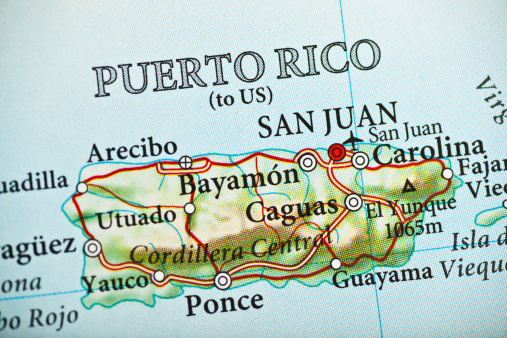
(Image courtesy of Wikipedia.com.)

Once again, the destiny of a people is in their hands at the ballet box. On November 6, 2012 when all of America will be casting votes for the U.S. presidency, Puerto Rican residents (who are U.S. citizens but cannot vote for its president) will vote to decide to remain a commonwealth, become a state, or an independent country.

This time, voters will have two questions. The first will ask residents if they want Puerto Rico to remain a U.S. territory. The second will pose three alternatives: independence, becoming a nation in free association with the United States, and statehood. The current status, “commonwealth” is a territorial status since it falls under the U.S. Constitution’s territorial clause.

Puerto Ricans for quite some time have not stood unified toward a collective political vision of their future. Today supporters of the commonwealth status would like to modify the status to one of a sovereign commonwealth, which pretty much enhances the relationship between the U.S. and Puerto Rico with P.R. negotiating relations with the U.S. as a sovereign nation, but remain a free associated commonwealth.

To me, that’s basically commonwealth 2.0. I think the commonwealth status has had its day and it’s time to move on.

The only viable long term options are independence or statehood. I believe the island of my ancestors should seriously consider becoming an independent country or the 51st state of the union. Independence could work with the United State’s help and a 10 year transitional period. The U.S. during this time would assist with getting Puerto Rico on its independent feet and help prepare Puerto Ricans to fend for themselves.

Since I am not a resident of Puerto Rico I cannot vote on this issue on November 6, but if I was a resident and had to make a decision today I lean toward statehood. Since 1898 we have been dependent upon the U.S. and have operated like a part of the country. The people of Puerto Rico should get all benefits of U.S. citizenship like voting for the U.S. president and having two senators and at least one voting representative in the U.S. Congress.

On November 6, voter turnout will be high. Back in 2000, more than 80 percent of registered voters went to the polls. Puerto Rico residents vote at much higher rates than residents of the 50 states.

If it became a state, Puerto Rico would be like the Hawaii of the east coast. Poverty, crime, and unemployment are dismal in P.R. so the added U.S. support as a state would finally give residents a fighting chance of a better standard of living.

There are disadvantages and advantages to both statehood and independence. With statehood Puerto Rico would not be able to have its own Olympic Team or Miss Universe contestant, along with entries in other sporting and social events.

With independence Puerto Rico would need to enlist a military and craft a possible defense decree with the U.S. Puerto Rico would also have to boost its major exports, which according to the EconomyWatch.com consists of  chemicals, electronics, apparel, canned tuna, rum, beverage concentrates and medical equipment.

President Barack Obama and Republican presidential nominee Mitt Romney have both said they support the commonwealth’s right to self-determination. No matter the outcome of the November 6, 2012, vote on Puerto Rico’s status, hopefully it will highlight a clearer understanding of what lies ahead for the people of Puerto Rico.


Share

Bronx Community Pride Center Closes After Former Director’s Arrest

Logo of the Bronx Community Pride Center, New York.

About two days after news that the former director of the Bronx Community Pride Center was charged and arrested for possibly embezzling $338,000, the board of directors of the LGBT non-profit organization today announced the closing of its doors effective June 30th.

“The board of directors of the Bronx Community Pride Center (BCPC), the borough’s largest LGBTQ service organization, has unanimously voted to cease operations of the center on June 30, 2012 and to begin making arrangements for current services to be provided by partner organizations within the Bronx,” noted a press release issued this evening.

The former director of the Bronx Community Pride Center, Lisa Winters, has been arrested and accused of stealing over $338K for personal expenses—including a vacation for her and her future wife to South Africa, according to an article published late this afternoon in the Gothamist.

According to the BCPC press release, because of the “current economic difficulties, past debt and inability to raise sufficient unrestricted funding, the organization can no longer implement its current programs. The organization has debts which exceed revenues at this time and without significant cash infusions from major donors they (the board of directors) are unable to continue operations financially.”

Winters, 47, and her wife Scroggins, who have been together for 14 years, were married at the City Clerk’s office in Manhattan on the first day of legal gay marriage last year, today’s article noted.

“As BCPC closes I ask that all Bronx LGBTQ organizations come together and fill the void that would be left behind,” said Antonio Centeno Jr., BCPC Board Chairperson. “The Board of Directors is committed to assisting in any way to make sure that our clients continue to be served, especially since this population is traditionally under served in the Bronx.”

The Bronx Community Pride Center was a not-for-profit organization which was incorporated in 1997 as the Bronx Lesbian and Gay Health Resource Consortium. Around 2005/2006 the name and mission was changed and the agency then became a community center.

“We’re a group of caring individuals and this decision has been difficult for us to make, but we will never give up for our mission of health equality,” said Centeno.

(For an updated version of this article check out the Examiner.com. )

Share

Undecided Latinos to Republicans: Just Say No


I’m a life-long Democrat and strongly supported President Barack Obama’s bid for U.S. President in 2008 and I will do the same this November. Many media outlets and blogs have written that the Latino vote in 2012 could decide the outcome of this year’s presidential campaign, and I agree. However, I am a bit concerned about how some Republicans are trying to sway undecided Latino voters their way and how many Latinos are seriously considering going over to the dark side.

I have to admit I don’t understand why any Latino, African-American, or gay or lesbian would be a Republican, but to each his/her own. I have accepted the fact that my Cuban brothers and sisters in Florida are overwhelmingly Republican, but I hope the recent influx of my fellow Puerto Ricans will balance out the Latino vote in the Sunshine State.

Thank God for Mexican Democrats across California and Texas, Puerto Rican Democrats in Connecticut, Illinois, and Pennsylvania, and Puerto Rican and Dominican Democrats in New York. With all their participation in this year’s election, I am confident President Obama will win another 4-year term.

However, I think Republicans will work incredibly hard to get as many Latino votes as possible and I’m afraid they might succeed to some level if Latinos fall for false promises.

The main reason I am sticking with the Democratic Party in this presidential election and voting again for President Barack Obama relates to the issue of immigration.

The entire Arizona immigration controversy showed me that Republicans like Jan Brewer are no friends of Latinos. The implemented statewide immigration law clearly racially profiled Latinos and why any Latino in that state would support Republicans is way beyond my comprehension. (P.S. – Brewer recently endorsed Republican Massachusetts Gov. Mitt Romney for President.)

Immigration reform is a hot topic and not one that can be easily resolved. However, the DREAM Act (an acronym for development, relief, and Education for Alien Minors) would be a step in the right direction. It allows non-documented youth who were brought over to the U.S. illegally a path to U.S. citizenship if they graduate from college or serve in the U.S. military. Republicans wholeheartedly have rejected the proposal. President Obama supports the DREAM Act.

President Obama’s health reform initiative will provide access to needed healthcare to millions of Latinos. What have Republicans done for Latinos in this area?

Another more personal reason why I’ll vote for President Obama again is his appointment of Supreme Court Justice Sonia Sotomayor. I’m still in awe that there is a Puerto Rican American on the Supreme Court thanks to Obama and I’d vote for him again this year just for that fact.

So if you’re an undecided Latino being swayed by the Republican party in this year’s presidential election, please, please…, just say no and vote for President Obama.

Share

Latinos Voted in Record Numbers in 2010

Data from a study by the Pew Hispanic Center published Tuesday in an Associated Press article found that 6.6 million Latinos voted in 2010, up from the 5.6 million in 2006. Latinos made up 6.9 percent of the 96 million voters in 2010, up from 5.8 percent of the 96.1 million voters four years earlier.

Among those record voters were 600,000 Latinos who turned 18 each year between 2006 and 2010 as well as 1.4 million foreign-born adult Latinos who became U.S. citizens and therefore eligible to vote, the center said.

According to exit polls, Hispanic voters are a solid Democratic constituency, breaking for President Barack Obama by 36 percentage points in 2008 and for the Democratic candidate in their congressional district by 22 points in the 2010 contests.

Despite the impressive increase, voter turnout among Hispanics continues to lag far behind non-Hispanic whites and blacks. Almost half of eligible white voters, 48.6 percent, and 44 percent of eligible black voters said they cast ballots in the 2010 elections. That compares to less than a third—31.2 percent—of eligible Latino voters who said they voted.

Among Latinos who do go to the polls, college graduates had the highest turnout rate at 50.3 percent, while Latinos 18 to 29 had the lowest at 17.6 percent.

Share