Panelists at SXSW 2013 Want to Know What Hispanics Think: Submit Your Latino Voice Survey Now

Image courtesy of votifi.com.

Image courtesy of votifi.com.

On Friday, March 8, at the SXSW 2013 in Austin, TX., a panel discussion will bring together several experts from all areas to explore the impact of the Hispanic voice on technology. During the presentation entitled “Latinos y Mobile: A Silver Bullet?” the community of new media leaders will also release the results from the second annual Latino Voice survey.

South by Southwest (SXSW) is a set of film, interactive, and music festivals and conferences that have taken place every spring (usually in March) since 1987 in Austin, Texas. The Latinos y Mobile panelists bring experience in politics, caused based organization, commercial campaigns and mobile in order to uncover trends in issue identification and activation around the Latino community.

In order to provide the most accurate and up-to-date Hispanic perspective, panelists are seeking nationwide Latino feedback. So take a moment to submit your answers to the Latino Voice survey now.

Feel free to also forward along this info to other Latinos to ensure the survey results are a huge hit at this year’s SXSW.

Share
Posted in latino, social media | Leave a comment

Shortstop … or Bust!: The Traveling Tales of Youth Baseball

shortstoporbustI am excited to promote a book from a newly published Latina author, Linda Padilla-Diaz. Shortstop … or Bust!: The Traveling Tales of Youth Baseball offers a personal account into the harried nature of youth baseball and presents an informative, amusing, and bittersweet story about the five-year journey of a group of boys who worked hard and played hard to win.

Under the attentive guidance of a volunteer manager passionate about baseball, a group of boys assembled as the “B” team to play travel baseball for their town team. In Shortstop … or Bust!, author Linda Padilla-Diaz shares a compilation of stories covering the journey through the five years her two sons played competitive traveling youth baseball—from her perspective as both a mother and the manager’s wife.

Shortstop … or Bust! describes Padilla-Diaz’s love of the game and delves into parents’ fixation for their children’s extracurricular activities, seeking the glorified shortstop position. The humorous, touching chronicle of lefty Derek and manager Harry provides firsthand insight into the growing revolution and competitiveness of youth travel baseball. The story begins with the modest commencement of the team with overzealous coaches and dads and describes their winning transformation through several seasons. Padilla-Diaz offers an entertaining play-by-play account of events and provides an up-close view of the games the team played.

Linda Padilla-Diaz is a working mother, law school graduate, baseball fanatic, coach, and softball director. She and her husband have two boys and live in northern New Jersey.

Congratulations on the new book, Linda!

Share
Posted in books | Leave a comment

December 21, 2012 Is Not The End of the World, But the Beginning of New One

2012_new_beginning

(Image courtesy of KnowledgeofToday.org.)

Some say the ancient Mayan civilization predicted the end of the world will occur this Friday, December 21, 2012. However, this is not a literal prediction of the physical end of the world, but hopefully the beginning of a new one.

According to a Wikipedia page, the 2012 phenomenon, a New Age interpretation of this transition is that the date marks the start of time in which Earth and its inhabitants may undergo a positive physical or spiritual transformation. Therefore, December 21, 2012, may mark the beginning of a new era.

The page notes that professional Mayanist scholars state that predictions of impending doom are not found in any of the classic Mayan accounts, and that the idea that the calendar “ends” in 2012 misrepresents Mayan history and culture.

Evo Morales, the president of Bolivia since 2006, looks at December 21st not as the ‘Mayan Apocalypse,’ but as a New Beginning. Morales, Bolivia’s first indigenous president, speaking at the United Nations in September, said the date marks an end to individualism and capitalism and a turn toward the collective good.

Morales believes December 21, 2012 signifies, among other things, “the end of selfishness and the beginning of brotherhood.”

“It is the end of hatred and the beginning of love, the end of lies and beginning of truth,” Morales said. “It is the end of sadness and the beginning of happiness, it is the end of division and the beginning of unity, and this is a theme to be developed.”

So there’s no need to fear the end of the world this Friday. Let’s all put some really good energy out there to help create a whole new world.

You can view and listen to President Morales’ complete 37 minute translated speech at the United Nations on UN Web TV.

Share
Posted in personal | Leave a comment

Results of the Puerto Rico Vote Leaves Many With More Questions Than Answers

(Image Courtesy of Watchdog.org.)

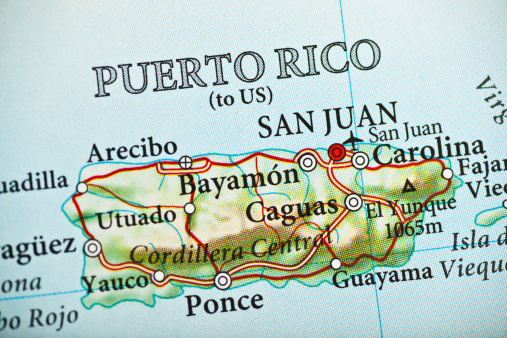
The political future of Puerto Rico remains unclear more than two weeks after residents cast their votes in high numbers. Close to 80 percent of Puerto Ricans voted in a referendum on Nov. 6th that aimed to re-evaluate Puerto Rico’s status with the United States.

Many media outlets announced the results of the recent vote now show that 61 percent of Puerto Ricans favor statehood, however that 61 percent is being questioned. The results of the two part vote may be more confusing than the island’s political status.

The first part of the vote consisted of a Yes/No question: Do you agree to maintain the current political territorial status? Here “No” won by nearly 54 percent. For the first time since the first of four plebiscites were held in 1967, a clear, simple majority voted against the current status and for some form of decolonization.

Even for those who voted yes, three options followed in the second part of the ballot: statehood, independence or a sovereign free associated state.

According to the Associated Press, 900,000 Puerto Rican voters or 54 percent said they were not happy with the current status. In the follow-up question, nearly 800,000 or 61 percent chose statehood as their preferred option, 437,000 picked sovereign free association and 72,560 selected independence. Close to 500,000 people left the question blank.

Angelo Falcón, president of the National Institute for Latino Policy, told CUNY-TV he believes there will be no immediate movement on the statehood issue in the U.S. Congress. Falcón notes if you factor in the almost 500,000 people who skipped the second question, the 61 statehood rate would go down to about 45 percent.

Rosa Clemente, the 2008 Green Party vice-presidential candidate and a supporter of Puerto Rican independence, believes the people of Puerto Rico truly want independence but are afraid of what a Puerto Rico without the support of the United States would look like.

Many also question if statehood is the general consensus on the island, why was pro-statehood Governor Luis Fortuño ousted in favor of pro-commonwealth Governor-elect Alejandro Garcia Padilla?

Both Falcón and Clemente believe Puerto Ricans on the U.S. mainland should have an opportunity to vote on the issue of Puerto Rico’s political status. According to the Pew Research Center, more people of Puerto Rican origin live in the United States than on the island.

The Associated Press stated that Puerto Rican Governor-elect Garcia plans to have a constitutional assembly in 2014 to address the island’s status and to raise another referendum with the support of Congress.

“I genuinely hope that Congress will listen to the will of the Puerto Rican people and to the citizens of that island,” he said.

[Below is Falcón and Cemente on CUNY-TV (interview within the first 10 minutes of the show.)]

Share
Posted in politics, puerto rico | Leave a comment

The People of Puerto Rico Vote Again to Define Their Status

(Image courtesy of Wikipedia.com.)

Once again, the destiny of a people is in their hands at the ballet box. On November 6, 2012 when all of America will be casting votes for the U.S. presidency, Puerto Rican residents (who are U.S. citizens but cannot vote for its president) will vote to decide to remain a commonwealth, become a state, or an independent country.

This time, voters will have two questions. The first will ask residents if they want Puerto Rico to remain a U.S. territory. The second will pose three alternatives: independence, becoming a nation in free association with the United States, and statehood. The current status, “commonwealth” is a territorial status since it falls under the U.S. Constitution’s territorial clause.

Puerto Ricans for quite some time have not stood unified toward a collective political vision of their future. Today supporters of the commonwealth status would like to modify the status to one of a sovereign commonwealth, which pretty much enhances the relationship between the U.S. and Puerto Rico with P.R. negotiating relations with the U.S. as a sovereign nation, but remain a free associated commonwealth.

To me, that’s basically commonwealth 2.0. I think the commonwealth status has had its day and it’s time to move on.

The only viable long term options are independence or statehood. I believe the island of my ancestors should seriously consider becoming an independent country or the 51st state of the union. Independence could work with the United State’s help and a 10 year transitional period. The U.S. during this time would assist with getting Puerto Rico on its independent feet and help prepare Puerto Ricans to fend for themselves.

Since I am not a resident of Puerto Rico I cannot vote on this issue on November 6, but if I was a resident and had to make a decision today I lean toward statehood. Since 1898 we have been dependent upon the U.S. and have operated like a part of the country. The people of Puerto Rico should get all benefits of U.S. citizenship like voting for the U.S. president and having two senators and at least one voting representative in the U.S. Congress.

On November 6, voter turnout will be high. Back in 2000, more than 80 percent of registered voters went to the polls. Puerto Rico residents vote at much higher rates than residents of the 50 states.

If it became a state, Puerto Rico would be like the Hawaii of the east coast. Poverty, crime, and unemployment are dismal in P.R. so the added U.S. support as a state would finally give residents a fighting chance of a better standard of living.

There are disadvantages and advantages to both statehood and independence. With statehood Puerto Rico would not be able to have its own Olympic Team or Miss Universe contestant, along with entries in other sporting and social events.

With independence Puerto Rico would need to enlist a military and craft a possible defense decree with the U.S. Puerto Rico would also have to boost its major exports, which according to the EconomyWatch.com consists of  chemicals, electronics, apparel, canned tuna, rum, beverage concentrates and medical equipment.

President Barack Obama and Republican presidential nominee Mitt Romney have both said they support the commonwealth’s right to self-determination. No matter the outcome of the November 6, 2012, vote on Puerto Rico’s status, hopefully it will highlight a clearer understanding of what lies ahead for the people of Puerto Rico.


Share
Posted in personal, politics, puerto rico | Leave a comment